Salta al contenuto principale
Logo
Between landscape and food: the roots and modernity of Lombardy’s gastronomy.

A selection of photographs that narrates Lombardy through food, interpreted as a key to understanding the landscape and the communities that inhabit it: not just nourishment, but memory, identity, and a vision for the future.

Lombardy is a region where the landscape makes the deep bond between the environment, human labor, and food culture particularly evident. Irrigated plains, cultivated hills, Alpine pastures, and complex rural systems form the backdrop of a gastronomic tradition that is born from the land and evolves over time, reflecting social and economic changes.

Food here is not merely an object of consumption, but the result of agricultural practices, production systems, and layered knowledge that have helped shape the territory. The selected images offer a visual journey through the region, following the thread that connects landscape, food production, and places of conviviality, from the countryside to the cities.

The itinerary bridges roots and modernity, showing how Lombard gastronomic culture is the result of a dynamic balance between tradition and innovation, between nature and human intervention.

Many of the photographs presented in this visual journey are part of the extensive corpus of images published to illustrate the volumes of the Attraverso l’Italia series dedicated to the Lombardy region.
Landscapes of Production

The Lombard plain appears as a space profoundly shaped by agriculture. Cultivated fields, farmsteads (cascine), and rural infrastructure outline a functional landscape where human labor has organized natural resources and cycles to sustain food production.

Silos in muratura della cascina grande Capelli a Vermezzo, 1920
La campagna lombarda tra Melegnano e Lodi, 1950
Il Cascinone, cascina sulla strada da Brembate ad Almenno, 1950
La campagna d’Inverigo in Brianza, 1950
Brianza, la campagna oltre Inverigo verso Erba, 1950

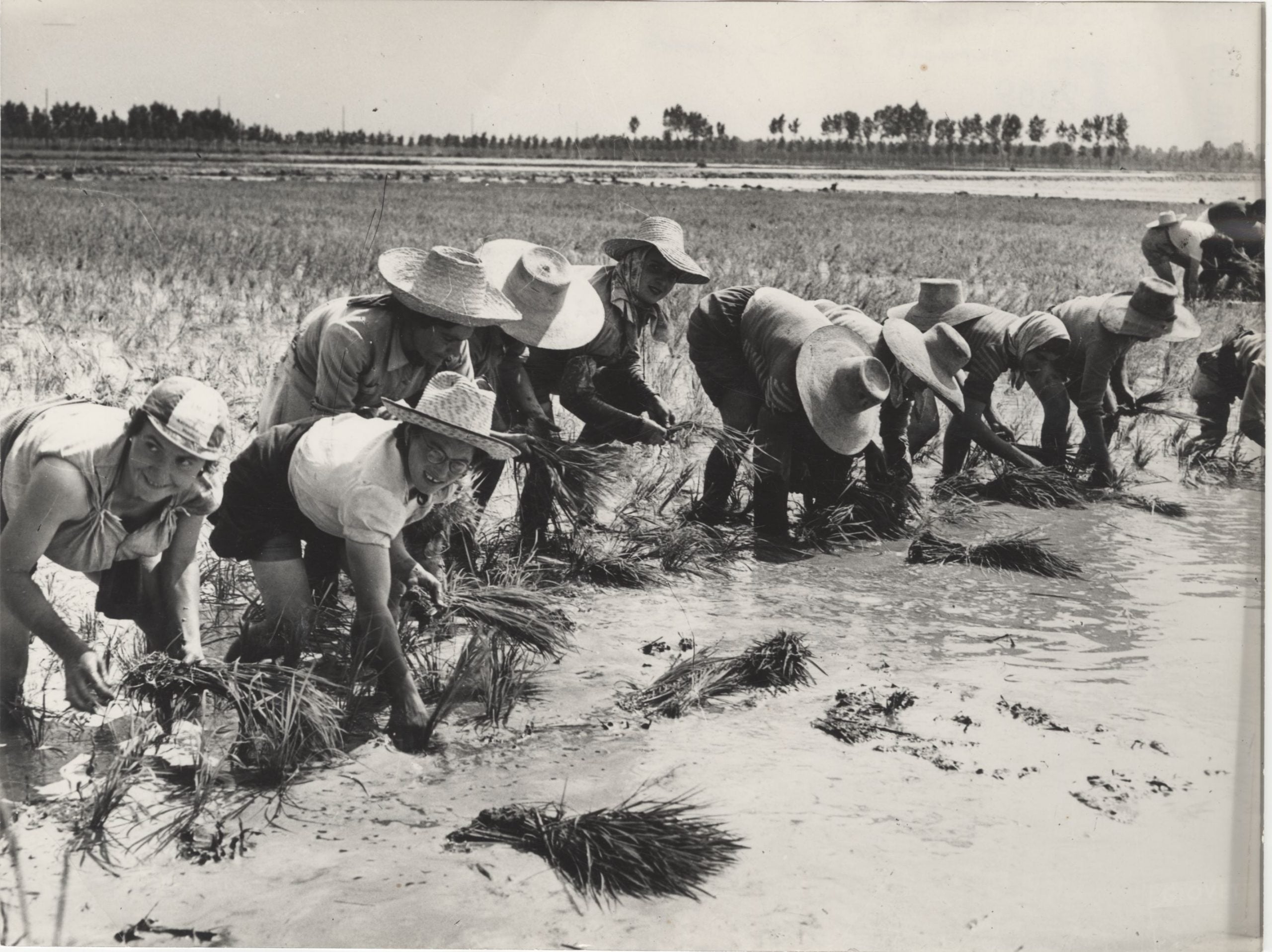
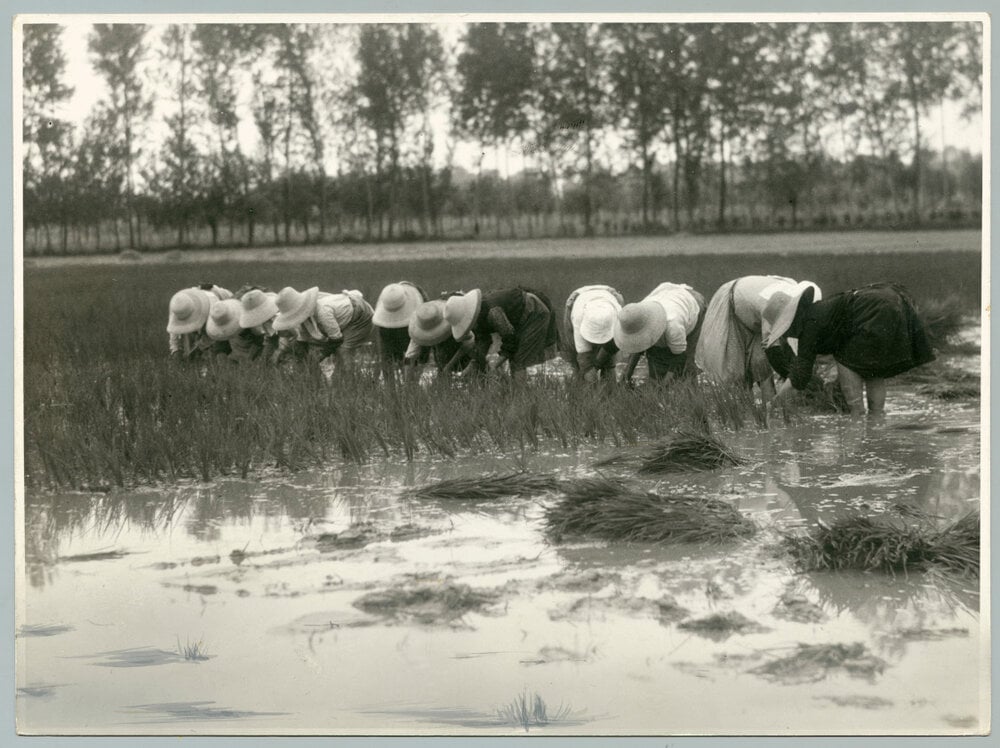
Water and Rice

Rice represents one of the defining elements of agricultural Lombardy. Rice paddies transform the plain into a landscape of water, where natural rhythms intertwine with those of seasonal labor, shaping one of the region’s most iconic products.

Mondine in una risaia, 1910
Trapianto del riso in Lomellina, ca. 1920
Trapianto di riso in Lomellina, 1940
Risaia del Pavese, 1954

Mountains, Pastures, and Husbandry

Mountain areas contribute decisively to the variety of Lombardy’s food production. Pastures and pastoral activities define a direct relationship between the natural environment and the transformation of resources, particularly within the dairy sector.

Il Pizzo Tresero visto dai pascoli sopra Santa Caterina Valfurva, ca. 1950
Un pastore e il suo gregge in Val Bondasca, ca. 1950
Magazzino per la stagionatura del formaggio Emmenthal, 1930

Specialized Crops and Territories

Alongside large-scale agricultural production, Lombardy features crops and resources linked to specific territorial contexts. Hillside viticulture, olive growing, and lake fishing enrich the regional gastronomic heritage, strengthening the bond between products and the landscape.

Coltivazione di viti nei dintorni di Sondrio, ca. 1950
Paesaggio con olivi a Gandria, 1920
La pesca sul lago d’Iseo, 1950

Places of Conviviality

The journey concludes in the places of consumption and conviviality, where food becomes a collective experience. Canteens, restaurants, and public spaces bear witness to the evolution of dietary habits and the transition from a rural to an urban dimension.

Read also
Stories
The agricultural face of Italy

A selection of photographs to tell the story of an agricultural Italy, with its hands and identity firmly anchored in the earth.

Silos in muratura della cascina grande Capelli a Vermezzo, 1920
With the contributionRegione Lombardia