Salta al contenuto principale
Logo
The agricultural face of Italy

A selection of photographs to tell the story of an agricultural Italy, with its hands and identity firmly anchored in the earth.

The Agricultural Face of Italy.

This is the title of a two-volume work — published between 1936 and 1938 — through which the Touring Club provided a snapshot of the state of agriculture in Italy during the years of the autarkic shift imposed by the regime. And it was a photographic record in the truest sense, given the predominant role of photography over text within the volumes.

The shots that make up this selection are not among those published in the original work and span a broader timeframe; however, they equally describe the agricultural dimension that for a long time characterized much of Italy, shaping its identity and traditions.

Raccolta della gypsophila in un appezzamento fuori Pescia, 1963

Of faces and hands

It is indeed the faces and bodies that are the protagonists of these snapshots, born from the intention of documenting agricultural activities in Italy. These shots become, above all, a prosaic and honest portrait of those who thrust their hands into the earth every day—those who entrusted the land with their hopes and hardships, the physical energy of precise gestures repeated like a ritual, and thoughts seasoned with sweat that smells of the meadow.

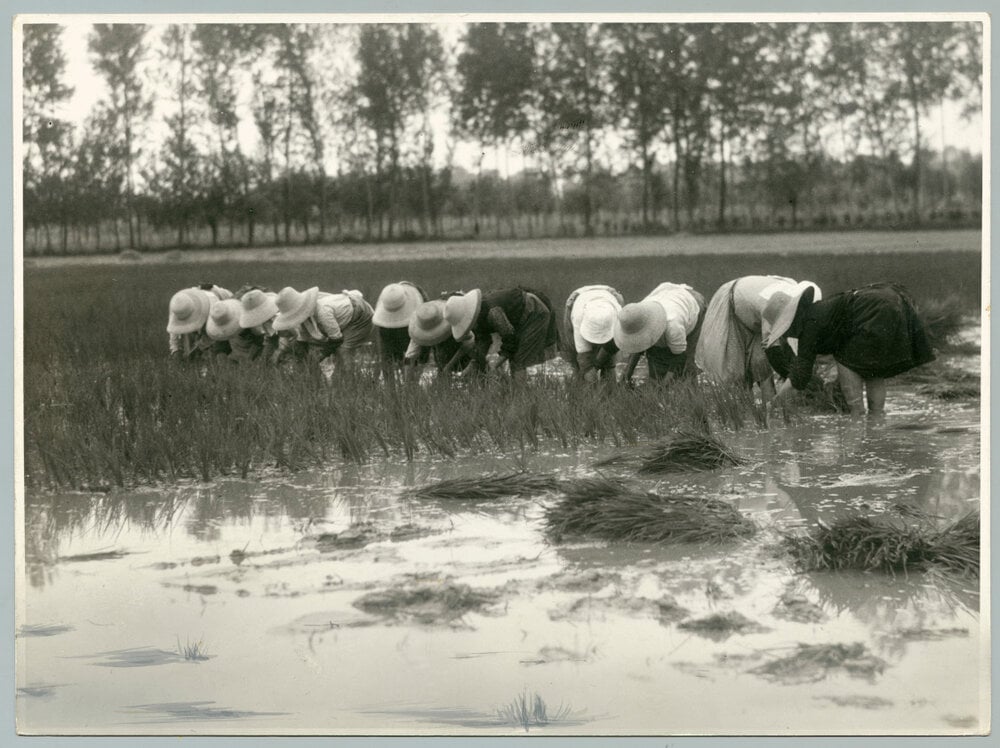
Mondine al lavoro in una risaia del Vercellese, 1955

A common alphabet

The result is a collective portrait of a rural Italy, with men and women working in the fields using cultivation techniques that were still largely artisanal and manual. Men and women of different dialects but united by a common alphabet, drawn by hands that pull weeds, sink into the soil with spades and harrows, and decisively extract the fruits cultivated by the sun and by their own patience and toil.

Raccolta dell'uva, 1940 ca.
Raccolta del gelsomino in una coltivazione nei pressi di Reggio Calabria, 1965
Spigolatura del grano in Puglia, ca, 1950
Viticoltura con sistema a pergola, Gardolo, 1959

The agricultural geography of Italy

What changes constantly in these photographs is the landscape. From the North to the South of the peninsula, the landscape in these images is characterized exclusively by nature and its agricultural use, as well as by the seasons. In Veneto and Trentino, the landscape speaks of the promise of grapes at the end of summer and the wine to come in the following months; in Lombardy, it tells of the endless horizon of the Po Valley and the stagnant water of the rice paddies; in the South, it takes on the scent of citrus and recounts the meticulousness of olive threshing.

Vendemmia in un vigneto dei colli di Valdobbiadene, 1961
Fienagione a Torgnon, 1967
Raccolta del bergamotto in provincia di Reggio Calabria. 1965
La battitura delle olive. ca. 1940
La cernita dei mandarini in Calabria, ca. 1950

Employment in the agricultural sector: a plate from the Thematic Atlas

To provide a more precise picture of the population employed in the agricultural sector during the decades in which the photographs were taken, we look at a plate from the Thematic Atlas published by the Touring Club between 1989 and 1992. In the 1960s, at the height of the economic boom, the total number of people employed in the agricultural sector was 24.3%, a percentage that remained unchanged until 1984. During the same reference period, the female employment rate stood at 29%.

Una tavola dell'Atlante Tematico edito dal TCI fra 1989 e 1992

The post-pandemic return to agriculture

This data is useful to compare with current figures, which show a significant “return to agriculture” by the younger population—a trend accentuated during the recently concluded pandemic period. A report by Coldiretti showed how, bucking the trend of other sectors, 2022 saw a 19% increase in young people under 34 employed in agriculture, with 55,000 youth-led businesses reclaiming and, at the same time, revolutionizing the profession of the farmer. The pandemic has therefore accelerated the return to the land that more and more young people are choosing for their future, in search of a pristine and primitive bond with nature and its fruits—a physical effort encoded in our DNA by the generations that preceded us, long unlearned, and which is being reinterpreted today by new farms through experimentation and forward-looking projects.
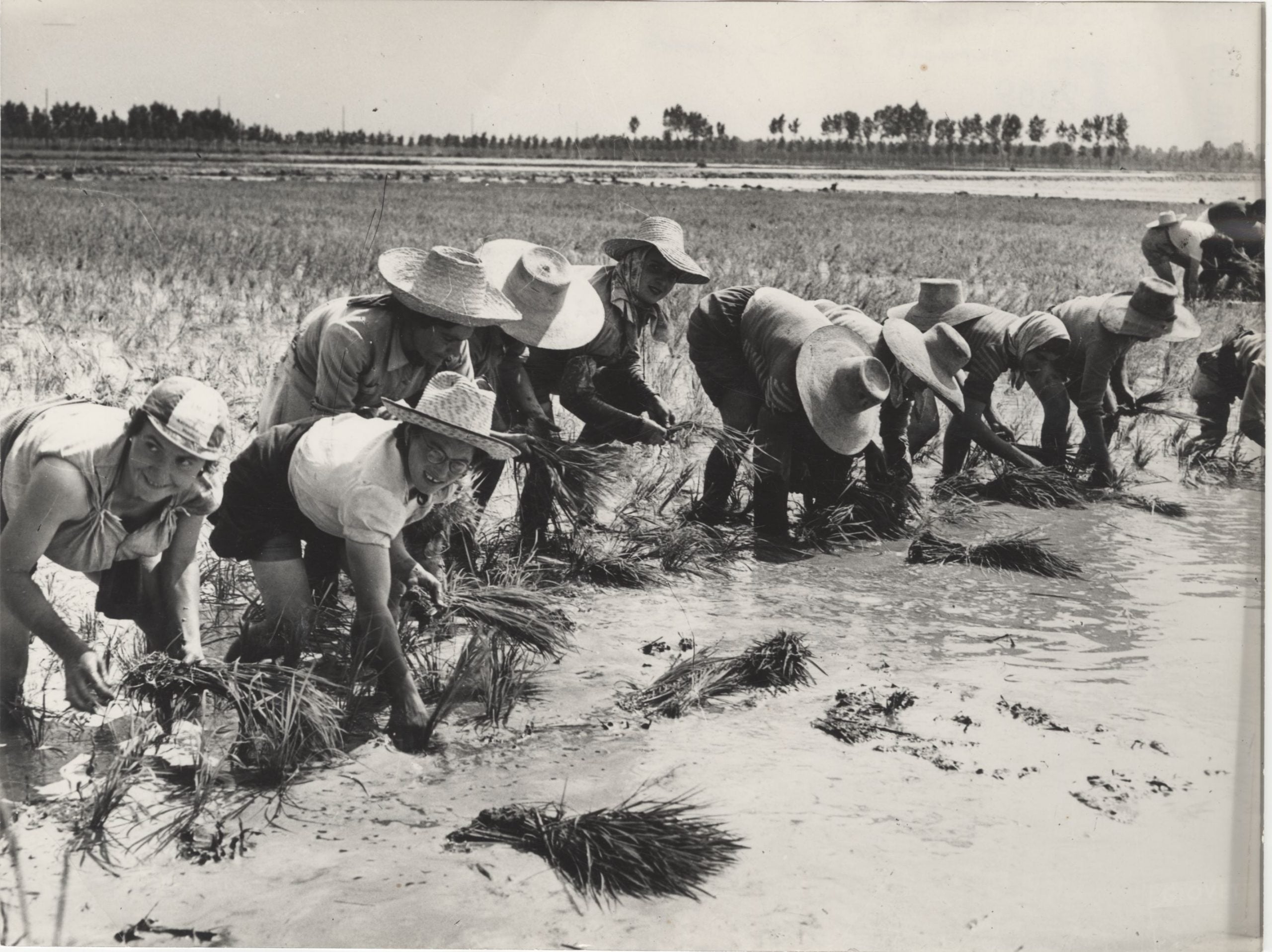
Una risaia in Piemonte, Domenico Riccardo Peretti Griva, ca. 1950
Fienagione in Val d'Aosta, Stefano Bricarelli, ca. 1940
"We need farmers, poets,
people who know how to make bread,
who love trees and recognize the wind"
Franco Arminio
Read also
Raccolta della gypsophila in un appezzamento fuori Pescia, 1963
With the contributionRegione Lombardia